Depression Treatment for Women and Adolescent Girls
Depression is the leading cause of disability for women worldwide. Across cultures and income levels, women are diagnosed with depression at nearly twice the rate of men. Their risk is compounded by a range of factors that can include:
- Relationship and role transitions. Women often experience frequent, abrupt change through marriage, motherhood, widowhood, and caregiving — transitions that are largely outside their control and often bring a loss of status, independence, income, or support.
- Gender-based violence. Women who experience sexual violence are more than twice as likely to develop depression as those who do not.
- Economic and social inequality. Women carry a disproportionate share of unpaid care work and are more likely to experience food insecurity, economic dependence, and limited control over household resources.
- The care gap is close to total. An estimated nine in ten people with a mental health condition in sub-Saharan Africa receive no professional care. Globally, about 9% of people with major depression receive minimally adequate treatment; in sub-Saharan Africa, that figure is 2%. The region has, on average, one psychiatrist per million people.
StrongMinds seeks to close the mental health treatment gap in sub-Saharan Africa. Women and girls account for around 80% of people who receive depression care through our programs and government partnerships.
Depression Across a Woman’s Lifespan
Depression can strike at any point in a woman’s life, but it often emerges during periods of significant change in her relationships, responsibilities, or role within the family. Adolescence, marriage, motherhood, caregiving, illness, and bereavement can all bring abrupt shifts in identity, autonomy, social support, and economic security.
Adolescence
The gender gap in depression first appears in adolescence. Before puberty, boys and girls experience depression at similarly low rates; within a few years of puberty, girls’ rates rise to roughly twice those of boys. Adolescence brings new pressures around behavior, safety, and family responsibility: more than one in five girls in sub-Saharan Africa experience rape or sexual assault before age 18, and teenage pregnancy remains a leading cause of school dropout for girls across the region. Girls are also more likely than boys to care for younger siblings, often at the expense of school. Untreated depression can erode self-esteem and agency, increase high-risk behavior, and limit future educational and economic opportunities.
Marriage and Motherhood
Marriage can bring one of the sharpest role transitions in an African woman’s life. In many parts of sub-Saharan Africa, a woman leaves her own family and support network to join her husband’s household, taking on new roles as both wife and daughter-in-law. This can be isolating, particularly when accompanied by conflict over household resources, decision-making, or family responsibilities. Strained relationships with in-laws are also associated with a higher risk of depression among new mothers.
Motherhood brings its own risks. Globally, roughly one in four women experience perinatal depression, according to a meta-analysis of more than 600,000 women across 51 countriesI. Prevalence in LMICs is estimated to be 17–30% higher than in high-income countries.
Illness, Caregiving, and Bereavement
Caring for a sick child involves multiple stressors, including navigating under-resourced health systems, long travel times, and extra expenses a family may struggle to absorb — all of which can trigger depression in caregivers, the majority of whom are women.
The loss of a child is a devastating and all-too-common experience — more than half of mothers aged 45–49 in sub-Saharan Africa have lost a child under five, and nearly two-thirds have lost a child of any age, a loss strongly associated with maternal psychological distress.
Later in life, many women take on responsibility for grandchildren. Roughly 60% of orphans in sub-Saharan Africa live with grandparents. Grandmothers – who provide the majority of care – must now support and nurture their grandchildren, while grieving the loss of their adult child, a combination that can lead to severe emotional distress.
Why Group Interpersonal Therapy Is The Best First Response
 Response
When depression is triggered by disrupted relationships, grief, isolation, or role transitions, Group Interpersonal Psychotherapy (IPT-G) can be a particularly effective first-line intervention, helping women identify the relationship or role change driving their depression and rebuild the communication and support to move through it, supported by other women facing similar experiences. For adolescent girls, early intervention can reduce the risk of recurring depression later in adulthood. Learn more about IPT-G →
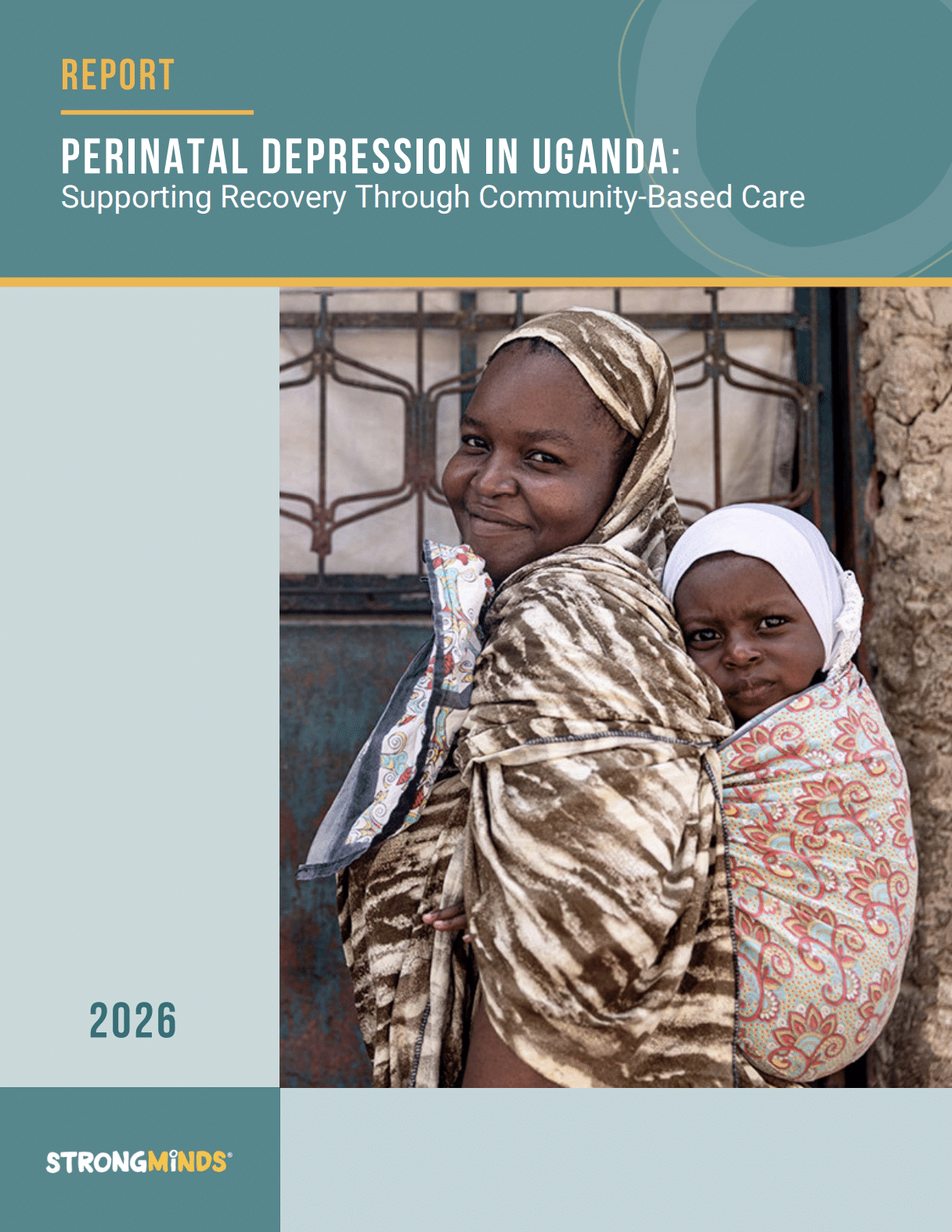
The Perinatal Depression Report:
This report examines the impact of community-based group therapy on women experiencing perinatal depression in Uganda, highlighting both the evidence behind the approach and the personal stories of recovery that underscore the need for greater investment in maternal mental health.