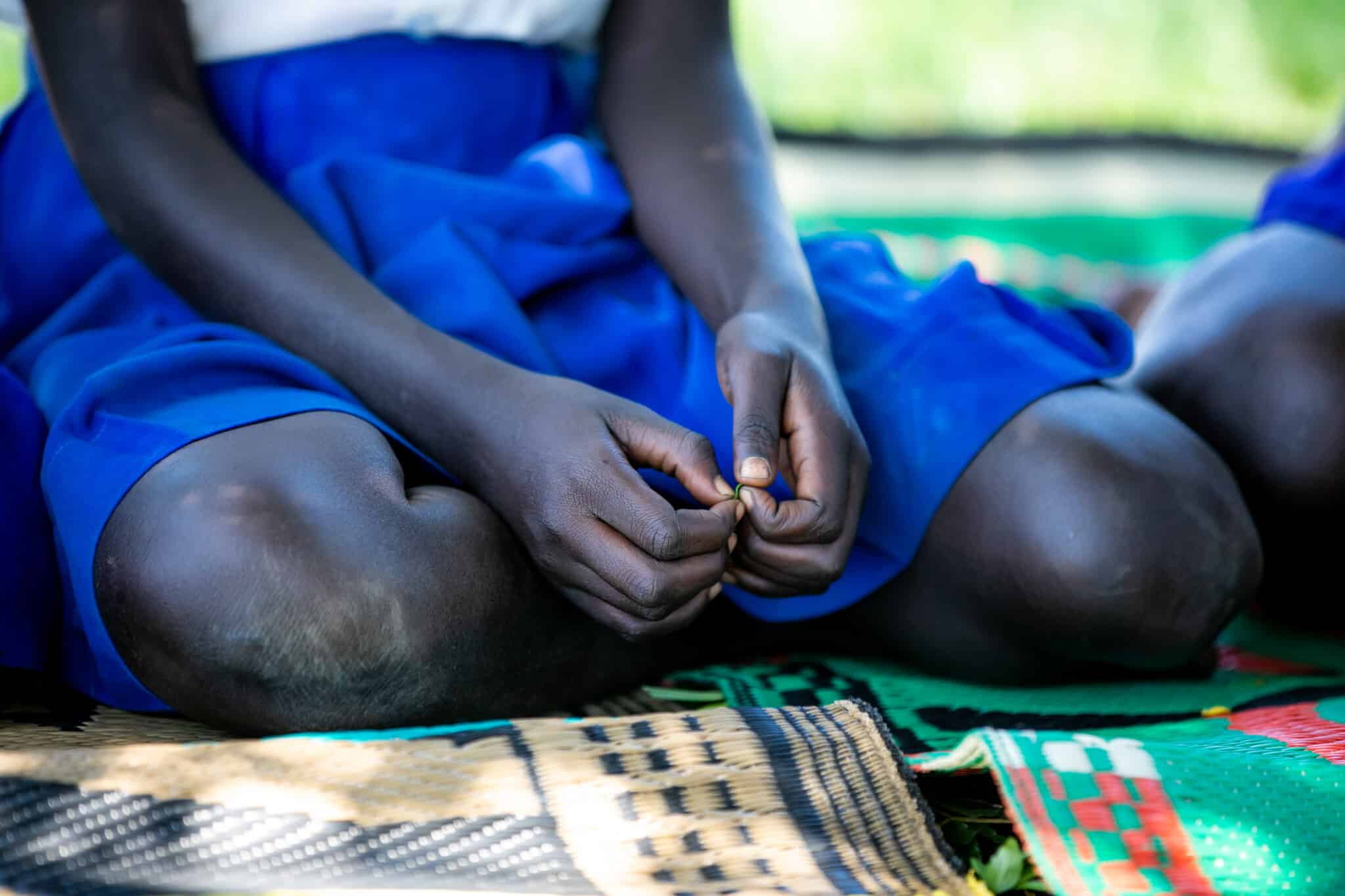
Depression Treatment for Students, Delivered Where They Already Are
Depression is one of the leading, most overlooked reasons students fall behind or drop out entirely. StrongMinds brings evidence-based therapy directly into the classroom. Left untreated, depression follows students into the classroom: poor concentration, absenteeism, failing grades, and, for far too many, leaving school altogether.
Nearly one in five young people experience clinically significant depression before age 18.
Roughly 27% of adolescents in sub-Saharan Africa experience depression.
Adolescent girls have a 3x higher risk of depression compared to boys.
Group Therapy, Adapted for the Classroom
We train teachers at these schools to lead six-week group therapy sessions. Small groups of 8–10 students meet weekly with a facilitator they already know and trust, someone equipped to guide them through it, not a stranger brought in from outside.
By embedding treatment in schools, StrongMinds, together with governments, reduces barriers to care and reaches adolescents where they already are. School-based delivery helps identify and support girls before depression disrupts their education.
Students describe the groups as a rare, confidential space to speak openly. In Uganda, this work is anchored by the government-mandated “Mental Health Hour” — a weekly period set aside in the school schedule specifically for this support.
In Kenya, the model looks a little different. Rather than training teachers to lead sessions, StrongMinds partners with county governments to train community health facilitators, building on health promoters and counselors already working in schools, who deliver the same six-week group therapy model, screening students through the county health system rather than the school staff themselves. The approach is active in Mombasa and Kiambu Counties, with Kilifi County beginning to extend the work into its schools as well.
Read More about Circular 20 (The Mental Health Hour)A Model That’s Working: At Scale
Combined results from our school-based programs across Africa.
184,000+
students treated for depression in schools across Kenya, Uganda, and Zambia.
840+
schools reached across Kenya, Uganda, and Zambia.
1,400+
trained teachers and facilitators leading groups.
11 pts
average drop in depression severity on the clinical PHQ-9 scale.
5.7
average increase in attendance (in days) over a 12-week term among students who participated in therapy.
51%
of students saw improved grades after treatment.
>80%
of treated girls return to or remain in school after therapy.
>75%
of students are depression-free after completing therapy.
Training Teachers Changes Classrooms, Too
When a teacher becomes a therapy facilitator, the effect doesn’t stop with the students in their group. Alongside direct treatment, we reach parents, school staff, and community leaders with mental health education — building more supportive school environments and helping teachers bring what they learn into every class they teach.
89%
of trained teachers say becoming a facilitator made them a better teacher.
68%
say their whole class performed better after their training.
24,000+
parents, teachers, and school staff reached through mental health sensitization.
Closing the Gap for Those Who Need It Most
Adolescent girls are up to three times more likely than boys to develop depression. The girls carrying the heaviest load are often the ones hardest to reach: those from low-income families or refugee-hosting districts.
Gender equity sits at the center of our model. By reaching girls when and where they need it most, we help them build the life skills to resist the pressures that put them at risk of HIV, unintended pregnancy, and early marriage — and to make their own decisions about their futures.
Group therapy gives girls a confidential space to talk through the pressures driving their depression and to build the confidence to make their own decisions about their future.
| “I managed to get confidence, and I told my mum I was not going to get married and stopped her from marrying me off.” – a student in Mayuge, Uganda
“I now concentrate in class and even love mathematics.”
– Adolescent client, Uganda