
Uganda in Partnership with StrongMinds:
Scaling community-based Mental Health care through Partnerships
Collaborators


Executive Summary
StrongMinds began working in Uganda in 2014 to provide depression care at scale through group talk therapy led by lay community health workers. The model has since reached hundreds of thousands of people with depression, in schools, communities, health centers, and prisons.
In partnership with government ministries and NGOs, StrongMinds has shown that depression care can be integrated into existing systems in a way that is cost-effective, sustainable, and scalable. Uganda’s success demonstrates a pathway for governments to expand access and embed mental health into public services.
BUILDING CREDIBILITY THROUGH RESULTS
When StrongMinds first introduced its group talk therapy model (known as Group Interpersonal Therapy, or IPT-G) to Ugandan communities, skepticism was high. General knowledge about depression and other mental health disorders was limited, and few believed group talk therapy could help.
Credibility grew as communities saw neighbors and loved ones recover from depression, regaining hope, resilience, and daily functioning. Word spread through former participants, while public campaigns—including radio ads—made depression understandable and reduced stigma.
This visible impact transformed attitudes and laid the foundation for national partnerships. With technical support from StrongMinds, Uganda’s government ministries are now rapidly expanding IPT-G access across schools, health facilities, and communities—demonstrating the advantage of government-led collaborations.
About StrongMinds
StrongMinds is a global nonprofit organization with a mission to democratize access to mental health care for people with depression, globally.
StrongMinds partners with governments to transform the way mental health care is delivered. integrating low-cost, evidence-based solutions into existing community-based programs and systems.
What is IPT-G?
Group Interpersonal Therapy (IPT-G) is an evidence-based, WHO-endorsed group talk therapy model that can be effectively delivered by lay community health workers. In IPT-G therapy groups, facilitators try to create a safe space for clients to open up with peers about their worries and struggles.
Over six sessions, these lay counselors guide structured discussions to help participants identify their underlying triggers of depression. Group members work together to strategize solutions to their problems, learn coping mechanisms, practice interpersonal skills, and identify support structures to lean on after therapy ends.
AN EVOLVING FRAMEWORK FOR SCALE AND SUSTAINABILITY
In Uganda, StrongMinds has steadily refined its model to make depression care faster, cheaper, and easier to integrate into government systems. Since 2014, three innovations have driven this progress:
First, therapy groups shifted from staff-led to community volunteer-led. Many volunteers facilitators are former therapy group participants, whose lived experience recovering establishes trust and credibility, while keeping costs low.
Second, treatment cycles were shortened over time from 16 to six weeks, enabling more people to be served in less time, while maintaining results.
Finally, StrongMinds moved from direct delivery to government-led integration. Through this Model District Program, governments recruit and train their own volunteer facilitators, while StrongMinds provides technical guidance, quality assurance, and supervision.
This approach embeds mental health into existing services—such as antenatal care, reproductive health, TB, and HIV programs—while district leaders set targets, track progress, and report into national systems. The result is a model that is innovative, cost-effective, and sustainable, offering governments a practical pathway to expand depression care at scale.
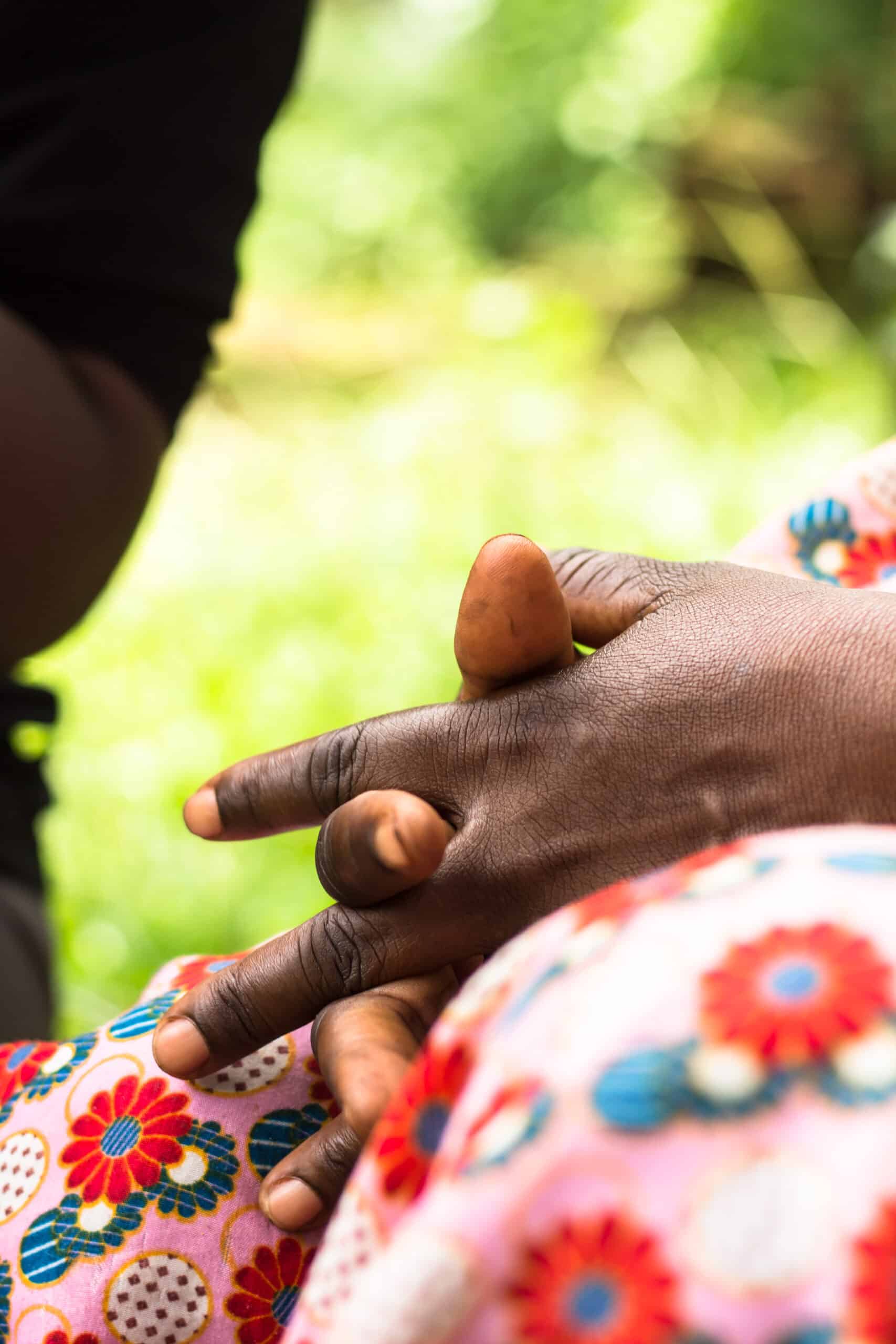
“I was very sad and hopeless… [Group sessions] gave me something to do, something to look forward to…I used to quarrel and fight often, but lately, I do none of that. I no longer talk to myself like I used to. I feel good about myself and am no longer depressed. I used to be so stressed and thin back then, but look at me now…I look better, stress-free, and relaxed.”
– Prossy, a South Sudanese refugee living in Palabek Settlement
A MULTI-SECTOR APPROACH TO MENTAL HEALTH
StrongMinds works across sectors with government and civil society partners to expand access to IPT-G and build sustainable local capacity. Together with clients and community leaders, we also advocate for policy and funding changes that strengthen mental health care.
Uganda’s Ministry of Health partners with StrongMinds to expand access to depression care by combining government leadership with technical expertise. The Ministry provides clinic space, integrates IPT-G into national health plans, and builds partnerships, while StrongMinds trains staff, delivers therapy, and shares evidence. This model demonstrates how governments can strengthen health systems, reach more people, and improve mental health in collaboration with StrongMinds, while building capacity to take full ownership of the programs.
In Uganda’s schools, the Ministry of Education and Sports partners with StrongMinds to provide mental health to adolescents in schools. In 2022, the Ministry issued a national circular requiring schools to dedicate weekly time for mental health support and later co-developed supervision guidelines to ensure quality delivery of group talk therapy (IPT-G). With StrongMinds training teachers, supporting peer facilitators, and reducing stigma across school communities, the partnership is helping more students stay in school, cope with challenges, and succeed academically.
StrongMinds works with the Uganda Prison Service (a department within the Ministry of Internal Affairs) to make mental health care available in prisons. Inmates who complete group therapy are trained to lead new groups, while prison staff provide oversight and support. This approach has improved the well-being of prisoners and staff, reduced suicide and conflict, and helped people reconnect with their families. The goal is for the Uganda Prison Service to take full ownership of program implementation, with StrongMinds continuing to provide training and technical support.
The Ministry partners with StrongMinds to support survivors of domestic and gender-based violence, particularly women. StrongMinds provides group therapy and referral services, while the Ministry connects vulnerable groups to care. The partnership is now being formalized through a Memorandum of Understanding, ensuring coordination and sustainability. Together, they are expanding access to mental health services for those most at risk.
StrongMinds partners with the Office of the Prime Minister, the Ministry of Health, local governments, and NGOs to treat depression and build resilience in communities affected by conflict and disasters. In emergencies, the Office of the Prime Minister provides security, access, and updated information on needs.
- In Lamwo District, StrongMinds trained community volunteers to lead therapy groups for refugees from South Sudan and the Democratic Republic of the Congo.
- In Kotido District, which is experiencing a devastating drought, StrongMinds has worked with Ministry of Health volunteers to provide therapy in communities facing climate change and extreme weather.
- In the Mbale District, StrongMinds has also worked with Ministry of Health volunteers and the International Red Cross to provide rapid response mental health services to communities affected by landslides and flooding.
StrongMinds also works with civil society groups to help their staff understand depression, emotional well-being, and coping strategies. We provide immediate support to those in distress and teach organizations psychological first aid, an evidence-based approach that offers emotional and practical support in the wake of trauma.
In addition to providing direct services and training to government agencies, StrongMinds also serves on multiple government working groups to coordinate activities across sectors.
Working groups include:
- The Mental Health and Psychosocial Working Group (Ministry of Health) – coordinates refugee response across the health sector.
- The Guidance and Counseling Technical Working Group (Ministry of Education and Sports) – provides strategic leadership and guidance on counseling, including addressing issues related to HIV/AIDS.
- Mental Health and Climate Change Working Group (Ministry of Health) – Highlights the effects of climate change on mental health.
- National Task Force on the HIV and AIDS Policy Review (Ministry of Health) – Provides policy and strategic guidance for the country’s HIV/AIDS response.
Circular 20
This case study highlights how youth-led advocacy in Uganda secured Circular 20, a landmark policy requiring weekly mental health education in schools, and why adolescent mental health is essential for learning and well-being.
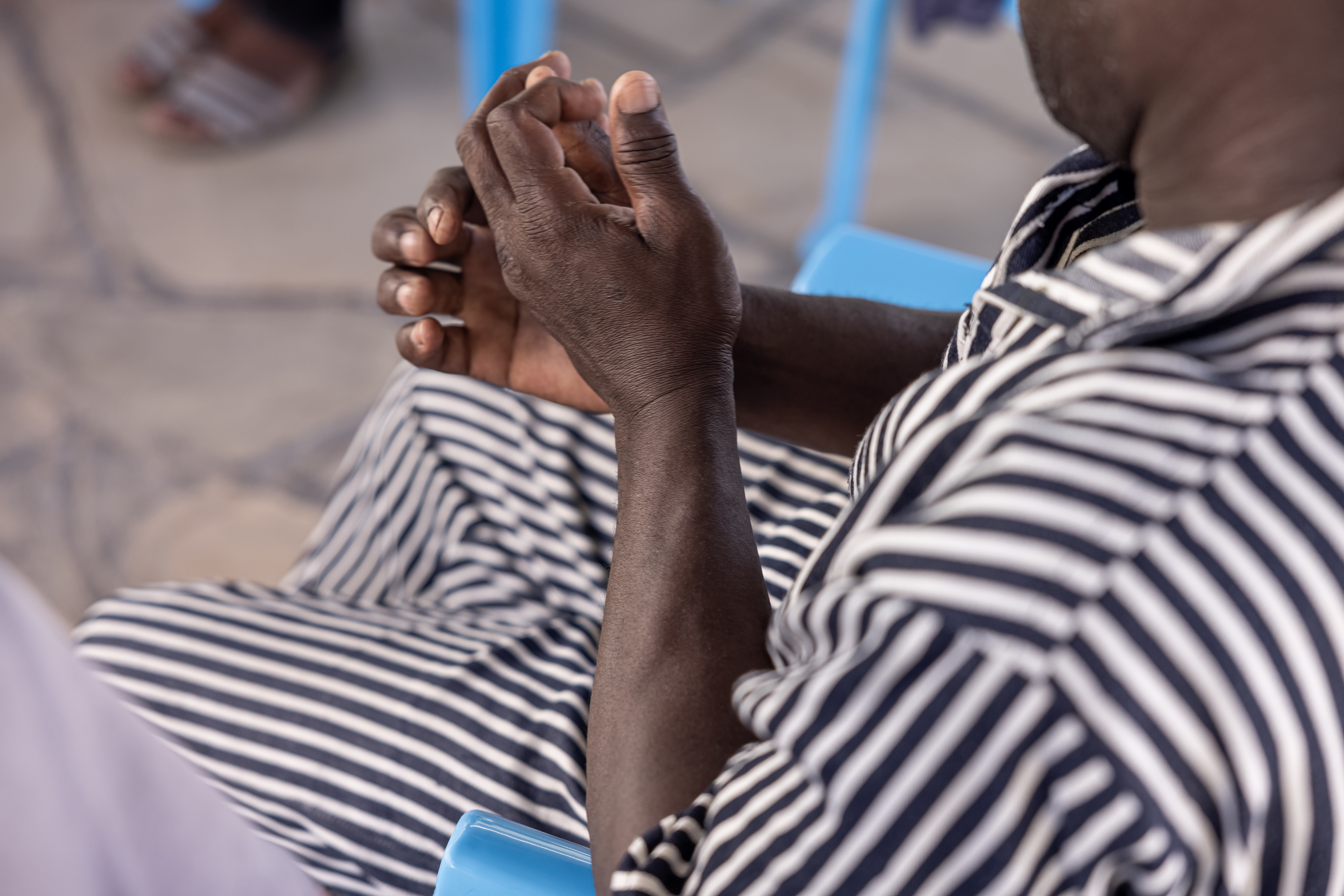
“I was angry and closed off. I didn’t talk to anyone. But from the first session, something left my body. I felt lighter. I started seeing how to change.”
– Former therapy group participant, currently incarcerated
THE VISION FOR TRANSFORMATION
THE MODEL DISTRICT PROGRAM
The Model District approach integrates depression care directly into local government systems. District authorities lead the process—recruiting and training volunteer group facilitators, setting targets, monitoring progress, and reporting into national health data systems—while StrongMinds provides technical guidance, quality assurance, and supervision standards. Mental health is embedded across sectors, including schools, health centers, HIV/TB clinics, and community programs. District leaders also coordinate advocacy, awareness campaigns, and cross-sectoral committees. Masaka was the first Model District in Uganda, and the program is rapidly expanding.
By rooting mental health in existing structures, the Model District Program creates a sustainable, low-cost system that other Ugandan districts—and governments globally—can replicate and scale.
LEARN MORE
For more information about this partnership, contact:
Vincent Mujune, StrongMinds Uganda Country Director at vincent.mujune@strongminds.org
Charlotte Oloya, StrongMinds Uganda Deputy Country Director at charlotte.oloya@strongminds.org
To learn how to integrate mental health your government programs, contact:
Ambrose Kanyaryeru, Director of Global Partnerships at ambrose.kanyaryeru@strongminds.org