
How We Met Our Big Outrageous Goal by Letting Go of It Entirely
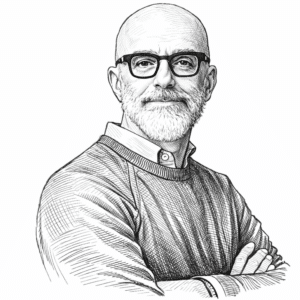 When I started StrongMinds in 2013, I set what felt like a properly outrageous goal: we would treat 2 million people in Africa for depression by 2020.
I wrote it down. I put it in front of donors. I put it on slides. I said it out loud to anyone who would listen.
I had a solid plan, too: train staff to deliver group interpersonal therapy — IPT-G — to women with depression across Uganda and Zambia. IPT-G is a clinically validated depression treatment. The evidence base was reliable and the method was solid, so we dove in, taking a few years to work out the wrinkles. We focused relentlessly on driving down costs so that we could treat as many people as possible, making progress every year.
But reality was coming down hard: by 2018, we had reached a total of 45,000 people. Two million by 2020 was not ambitious, it was fantasy.
So I did what any disciplined, strategic leader does.
I moved the goalpost.
Two million by 2025. There. Much more reasonable.
With our goal safely lodged seven years in the future, we turned back to the work of driving down costs to reach more people.
We encourage innovation everywhere — our best breakthroughs often start as small experiments from unexpected corners of the team. In 2018, one of our team members In Uganda began testing with a new approach: peer-led therapy. The facilitators were not staff members, but former therapy group participants who could speak with authority about the transformation they had lived. Many of these women were already our greatest champions, fiercely committed to helping others recover from depression as they had. What if we formalized their role — trained them, supervised them, and supported them to lead groups themselves?
For the first time, the math looked like it might work.
We leaned hard into peer-led IPT-G, and started reaching more people, faster, at lower cost. We also began shortening the therapy cycle, carefully reducing the duration of group therapy from 16 weeks to 12, then 10, and eventually eight. Results were strong. We were convinced this was the magic formula.
But then the pandemic arrived. Lockdowns happened. Operations froze.
Like many organizations, we convinced ourselves we had found the workaround in technology–teletherapy. Of course! Infinitely scalable, pandemic-proof, the future. We ran at it.
And then we measured it.
Teletherapy was more expensive than in-person therapy — one of those humbling moments when the spreadsheet disagrees with your vision.
Lockdowns lifted and we returned to in-person groups. We tested a shorter, six-week therapy cycle and were happily surprised to discover that participant attendance and outcomes actually improved. Again, costs fell. Reach grew.
By the end of 2023, we had treated an impressive 450,000 people, but we were nowhere near 2 million by 2025 — not even a quarter of the way there.
So, we simply stopped talking about it. We scrubbed it from our communications. And then scrubbed it again. And again.
I cannot fully describe the experience of trying to delete a number you once announced to the entire world, only to watch it cheerfully reappear in a deck, a one-pager, a grant report, an old web page someone forgot about, or even a T-shirt. We would bury it; it would come back, blinking, asking for water.
Meanwhile, another staff-led innovation began to take hold. This time, the idea was to scale through government health workers — who were also lay community members.
We tapped into the community health systems already in place — the people already walking those villages for other health programs — and trained them to deliver therapy. We pursued government partnerships across all sectors; integrating our model into health, education, even prison systems.
The insight, once we saw it, was almost embarrassingly obvious: no NGO on earth can reach as far or as deeply into a society as a government can.
The results were immediate. We surged past targets that even we had privately considered too aggressive. Blue skies ahead.
But, you all know the next plot twist: USAID closed, and the ground collapsed under the global health sector.
Seismic events have a way of clarifying things.
Government integration was no longer enough. The new goal: full handover of our model to governments, stepping back to provide technical assistance. Our innovations could continue to drive the cost per person down further and faster so governments could absorb, own, and sustain this work without us, without bilateral aid. The mandate was heart-stopping, and the deadline was yesterday.
And yet, within a year of USAID closing, we made it happen: governments now run the programs we once ran, while we run in the background. In our first year, the cost-per person treated for depression was $315. Today, hundreds of thousands of people across Africa are receiving depression care each year for less than $15 per person.
It’s still not enough. We must now look beyond IPT-G for solutions that don’t yet exist. To make depression care abundantly available in communities across Africa, the cost must shrink to mere pennies.
Looking back, here is what I have come to believe: we started with one model — 16 weeks, staff-led IPT-G — and it was a good one.
But we were never loyal to the model.
We were loyal to the people we had not reached yet.
That distinction turned out to be everything. It let us say yes to ideas that sounded a little wild at the time — peer therapy, government-led delivery, six-week treatment cycles — and it forced us to abandon a few darlings we genuinely loved. Sorry, teletherapy.
And the punchline, the part I still cannot quite get over, is this: we hit it.
Not by 2020. Not by 2025. But six months after the end of 2025, we passed 2 million people treated for depression — the very number I had announced, retracted, re-announced, deleted, and tried so hard to forget.
We reached 2 million not by clinging to the plan, but by being willing to let go of it — over and over. Driving down the cost to reach one more person was the North Star. Everything else was negotiable.
So to the 2 million pledge I spent years trying to scrub from our materials: I am sorry I doubted you.
You were more stubborn than I was.
And thank goodness for that.
Sean Mayberry
CEO & Founder